


 Cart
Cart
 sales@molnova.com



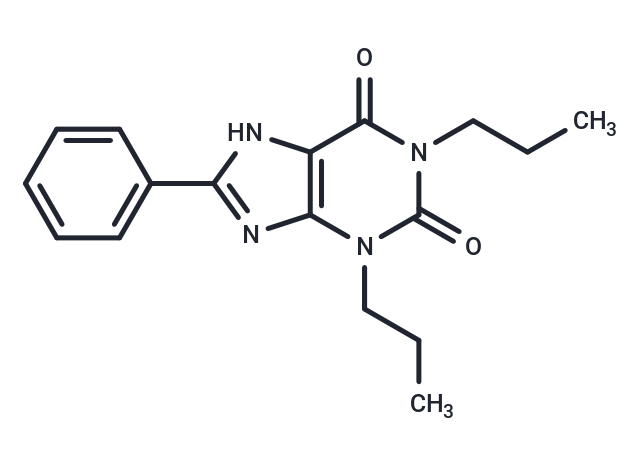
Adenosine receptor A1 antagonist 5
CAS No. 85872-53-3
Adenosine receptor A1 antagonist 5( —— )
Catalog No. M33817 CAS No. 85872-53-3
Adenosine receptor A1 antagonist 5 acts as an adenosine antagonist, is an oxypurine, acts as an insecticide and pest control agent, and has an inhibitory effect on elevated blood pressure.
Purity : >98% (HPLC)
 COA
Datasheet
HNMR
HPLC
MSDS
Handing Instructions
COA
Datasheet
HNMR
HPLC
MSDS
Handing Instructions
| Size | Price / USD | Stock | Quantity |
| 2MG | 149 | Get Quote |


|
| 5MG | 228 | Get Quote |
|
| 10MG | 333 | Get Quote |
|
| 25MG | 552 | Get Quote |
|
| 50MG | 787 | Get Quote |
|
| 100MG | 1062 | Get Quote |
|
| 500MG | 2124 | Get Quote |
|
| 1G | Get Quote | Get Quote |
|
Biological Information
-
Product NameAdenosine receptor A1 antagonist 5
-
NoteResearch use only, not for human use.
-
Brief DescriptionAdenosine receptor A1 antagonist 5 acts as an adenosine antagonist, is an oxypurine, acts as an insecticide and pest control agent, and has an inhibitory effect on elevated blood pressure.
-
DescriptionNPC 200 is a potent and selective antagonist of Adenosine A1 Receptor. NPC 200 reverses NECA-induced left and right atrial depression with EC50s of 1.08 and 2.03 μM.
-
In Vitro——
-
In Vivo——
-
Synonyms——
-
PathwayGPCR/G Protein
-
TargetcAMP
-
RecptorcAMP
-
Research Area——
-
Indication——
Chemical Information
-
CAS Number85872-53-3
-
Formula Weight312.37
-
Molecular FormulaC17H20N4O2
-
Purity>98% (HPLC)
-
Solubility——
-
SMILESC(CC)N1C2=C(NC(=N2)C3=CC=CC=C3)C(=O)N(CCC)C1=O
-
Chemical Name——
Shipping & Storage Information
-
Storage(-20℃)
-
ShippingWith Ice Pack
-
Stability≥ 2 years
Reference
1. P. V. Kaplita, et al. NPC 205 is a potent and selective adenosine A1, receptor antagonist: Correlation among receptor binding, biochemical, and physiological assays. , 20(4), 429–443.
molnova catalog



related products
-
I942
I942 is a novel, selective ACyclic nucleotide (NCN) EPAC1 agonist that activates exchange proteins to regulate inflammatory gene expression in human umbilical blood tubes and inhibit pro-inflammatory cytokine signaling associated with cardiovascular disease.
-
EPAC 5376753
EPAC 5376753 is an allosteric inhibitor of EPAC1 with an IC50 of 4 μM in Swiss 3T3 cells.
-
7-O-Methylrosmanol
7-O-Methylrosmanol can effectively suppress FSK-induced luciferase expression under the control of the CRE, PEPCK-C and G6Pase gene promoters, it may contribute to its antihyperglycemic activity.
